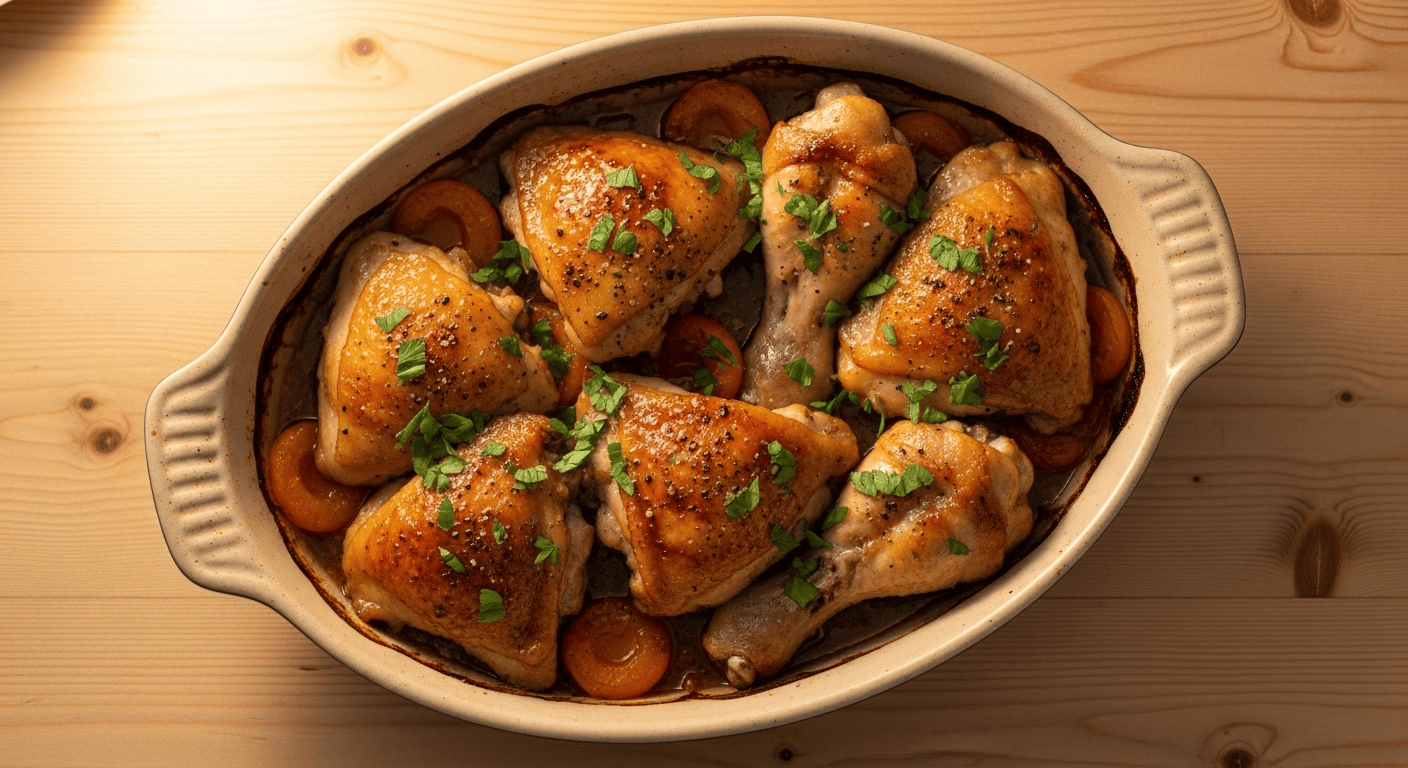
Baked Apricot Chicken: Easy & Flavorful Weeknight Meal
Perfect baked apricot chicken recipe with sweet apricot glaze. Easy chicken dinner ready in 30 minutes – the best weeknight meal with simple ingredients and amazing flavor!
Prep
10 min
Cook
30 min
Total
40 min
Servings
4 servings
Ingredients
Instructions
- 1
Preheat oven to 400°F (200°C). Line a baking dish or rimmed baking sheet with parchment paper.
- 2
Pat chicken thighs dry with paper towels. Season both sides with salt and pepper. Arrange in single layer in prepared dish.
- 3
In a medium bowl, whisk together apricot preserves, Dijon mustard, apple cider vinegar, soy sauce, garlic powder, and onion powder until smooth.
- 4
Spoon or brush about half of the glaze over chicken thighs, reserving the other half for basting.
- 5
Bake for 15 minutes. Remove from oven and baste with remaining glaze.
- 6
Return to oven and bake another 10-15 minutes until chicken reaches 165°F (74°C) and glaze is bubbly and caramelized.
- 7
Remove from oven and let rest for 5 minutes before serving. Garnish with fresh parsley or chives if desired.
Notes
Tips for Success
- Sticky, sweet-and-savory delight
- Tender chicken with luscious apricot glaze
- Perfect for weeknight dinners
- Big flavor with minimal fuss
- Versatile pairing options
Common Mistakes to Avoid
- Chicken can dry out if overcooked
- Glaze can burn if oven is too hot
- High sugar content from preserves
- Can become too salty if over-seasoned
- Chicken may not brown if not patted dry
Nutrition (per serving)
400 kcal
Calories
Is there anything more comforting than a home-cooked meal that’s both incredibly flavorful and deceptively simple to prepare? This baked apricot chicken recipe hits all those sweet spots, transforming humble chicken pieces into a sticky, sweet-and-savory delight that’s perfect for any weeknight dinner. Imagine tender chicken, coated in a luscious apricot glaze, baked until golden and bubbling – it’s a dish that promises big flavor with minimal fuss, making it an absolute staple in my kitchen. Get ready to impress your family (or just yourself!) with this surprisingly easy and utterly delicious meal.
Table of Contents
Ingredients
Gathering your ingredients for this apricot chicken recipe is a breeze. Most items are likely already in your pantry! The beauty of this dish lies in its simplicity and the way a few key ingredients create such a harmonious flavor profile.
- 1 ½ – 2 pounds boneless, skinless chicken thighs: I prefer thighs for their juiciness and flavor, especially since they don’t dry out easily. You can use chicken breasts, but cooking time will vary, and they might be a bit drier.
- 1 (10-ounce) jar apricot preserves (or apricot jam): This is the star of our glaze! Choose a good quality one that you enjoy the taste of. If you can find one with a higher fruit content, even better.
- ¼ cup Dijon mustard: Adds a subtle tang and helps balance the sweetness of the preserves. Don’t skip it; it’s crucial for depth of flavor.
- 2 tablespoons apple cider vinegar: Provides a touch of acidity to cut through the richness and brightness to the sauce. White vinegar or lemon juice can be substituted in a pinch.
- 1 tablespoon soy sauce (low sodium preferred): For an umami kick and a savory depth. Tamari can be used for a gluten-free option.
- 1 teaspoon garlic powder: A classic flavor enhancer that melds beautifully with the other ingredients. Fresh minced garlic (1-2 cloves) can also be used.
- ½ teaspoon onion powder: Complements the garlic and adds another layer of savory flavor.
- ¼ teaspoon black pepper: Freshly ground is always best for maximum flavor.
- Salt, to taste (for seasoning chicken): Just a pinch before baking.
- Optional garnish: Fresh parsley or chives, chopped, for a pop of color and freshness.
Timing
One of the best things about this easy chicken dinner is how quickly it comes together, making it perfect for those busy weeknights.
- Prep time: 10 minutes
- This includes seasoning your chicken and whisking together the simple glaze. Minimal chopping or complex steps involved!
- Cook time: 25-30 minutes
- Depending on the thickness of your chicken and your oven, it might take a little less or a little more. Always cook until chicken reaches an internal temperature of 165°F (74°C).
- Total time: 35-40 minutes
- From start to finish, you’ll have a delicious, flavorful meal on the table in under an hour.
Time-Saving Tips:
- Marinate Ahead: While not strictly necessary, you can coat the chicken with the apricot glaze up to 24 hours in advance and keep it in the fridge. This allows the flavors to really meld and makes dinner prep even faster.
- Pre-cut Chicken: If using larger chicken breasts, consider cutting them into smaller, uniform pieces (e.g., cutlets or strips) to ensure faster and more even cooking.
- One-Pan Meal: To save on cleanup, bake your chicken on a sheet pan lined with parchment paper. You can even roast some vegetables alongside it (like broccoli or asparagus) in the last 15-20 minutes of cooking.
Step-by-Step Instructions
Let’s get cooking! Following these simple steps will ensure your baked apricot chicken turns out perfectly every time.
- Preheat Oven & Prep Pan: Preheat your oven to 400°F (200°C). Line a baking dish or a rimmed baking sheet with parchment paper for easy cleanup.
- Season the Chicken: Pat the boneless, skinless chicken thighs dry with paper towels. This helps the seasoning stick and the chicken to brown nicely. Season both sides generously with salt and pepper. Arrange them in a single layer in your prepared baking dish.
- Prepare the Apricot Glaze: In a medium bowl, whisk together the apricot preserves, Dijon mustard, apple cider vinegar, soy sauce, garlic powder, and onion powder until smooth and well combined. This is where the magic happens for our delicious apricot chicken.
- Quick Tip: If your apricot preserves are very thick, you can warm them slightly in the microwave for 10-15 seconds to make them easier to whisk.
- Coat the Chicken: Spoon or brush about half of the apricot glaze over the chicken thighs, ensuring each piece is well coated. Reserve the other half of the glaze for basting.
- Bake the Chicken: Place the baking dish in the preheated oven and bake for 15 minutes.
- Baste & Finish Baking: After 15 minutes, remove the dish from the oven. Carefully baste the chicken with the remaining apricot glaze. Return to the oven and continue baking for another 10-15 minutes, or until the internal temperature of the chicken reaches 165°F (74°C) using a meat thermometer, and the glaze is bubbly and slightly caramelized.
- Pro Tip: For extra browning on the glaze, you can briefly place the chicken under the broiler for 1-2 minutes at the very end, watching it closely to prevent burning.
- Rest & Serve: Once cooked, remove the chicken from the oven and let it rest in the dish for 5 minutes before serving. This allows the juices to redistribute, ensuring super moist and tender chicken. Garnish with fresh parsley or chives, if desired.
Healthier Alternatives for the Recipe
Making small tweaks to this already fantastic apricot chicken recipe can easily align it with your dietary goals without sacrificing flavor.
- Lower Sugar Glaze: Apricot preserves are naturally high in sugar. You can reduce the sugar content by using a “sugar-free” or “reduced-sugar” apricot jam. Alternatively, blend fresh or frozen apricots with a touch of honey or a sugar substitute like stevia or erythritol, then thin with a little water or chicken broth to achieve a glaze-like consistency.
- Leaner Protein: While chicken thighs are delicious and moist, you can certainly use boneless, skinless chicken breasts for a leaner option. Just be mindful of the cooking time, as breasts tend to cook faster and can dry out if overcooked. Turkey tenderloins or even pork loin can also be substituted. For another take on healthy chicken recipes, you might enjoy exploring this easy Moroccan chicken tagine on my site.
- Increase Vegetables: Turn this into a one-pan meal by adding chopped vegetables directly to the baking pan during the last 20 minutes of cooking. Think broccoli florets, asparagus spears, bell pepper strips, or even chopped sweet potatoes. They’ll roast in the delicious apricot glaze, soaking up all that flavor.
- Whole Grains: Serve your baked apricot chicken with brown rice, quinoa, or whole wheat couscous instead of white rice to boost fiber intake.
- Reduce Sodium: Opt for low-sodium soy sauce. You can also replace soy sauce with coconut aminos for a soy-free and lower sodium alternative. If you’re looking for even more ways to enjoy this classic, you might find some interesting ideas on another version of my baked apricot chicken recipe that explores different flavor nuances.
Serving Suggestions
The beauty of this baked apricot chicken is its versatility. It pairs beautifully with a range of sides, making it easy to create a complete and satisfying meal.
- Rice or Couscous: A classic pairing. White rice, brown rice, or fluffy couscous are excellent for soaking up every last bit of that delicious apricot glaze.
- Roasted Vegetables: Complement the sweet and savory chicken with simply roasted asparagus, green beans, broccoli, or Brussels sprouts. Drizzle them with a little olive oil, salt, and pepper before roasting alongside the chicken or separately.
- Simple Salad: A crisp green salad with a light vinaigrette provides a refreshing contrast to the rich chicken.
- Mashed Potatoes: Creamy mashed potatoes or even mashed sweet potatoes would be a comforting side, perfect for soaking up the sauce.
- Bread: Crusty bread or dinner rolls are always a good idea for wiping the plate clean!
- Wine Pairing: A light-bodied white wine like a dry Riesling or a Grüner Veltliner would complement the sweetness and acidity of the dish beautifully. For red wine lovers, a light Pinot Noir could also work.
This recipe is also fantastic for meal prep! Cook a batch of baked apricot chicken at the beginning of the week, and you’ll have delicious protein ready to go for lunches or quick dinners. For more inspiration on serving ideas and variations, don’t forget to check out another one of my trusted apricot chicken recipes here.
Common Mistakes to Avoid
Even a simple dish like baked apricot chicken can go wrong if you’re not careful. Here are some common pitfalls and how to steer clear of them:
- Overcooking the Chicken: This is the most common mistake with any chicken dish. Overcooked chicken becomes dry and tough. Always use a meat thermometer to ensure your chicken reaches an internal temperature of 165°F (74°C) at its thickest part, then remove it from the oven promptly. Chicken breasts, in particular, are prone to drying out.
- Not Patting Chicken Dry: Excess moisture on the chicken skin prevents it from browning properly and can dilute the flavor of your glaze. Always pat chicken pieces thoroughly dry with paper towels before seasoning.
- Burning the Glaze: The apricot glaze, with its sugar content, can burn if the oven is too hot or if baked for too long without basting. Keep an eye on it, especially during the last 10 minutes. If it starts to brown too quickly, you can loosely tent the dish with foil.
- Not Reserving Glaze for Basting: Using all the glaze at the beginning means you won’t have any left to baste halfway through, which helps build layers of flavor and keeps the chicken moist. Reserving half for basting is key.
- Using Too Much Salt: Remember that soy sauce is salty. Season the chicken with salt first, but be mindful of the soy sauce in the glaze to avoid an overly salty dish. Taste your glaze before adding it, and adjust seasoning if necessary.
- Crowding the Pan: If your chicken pieces are too close together in the baking dish, they will steam instead of roast, leading to less browning and a less flavorful result. Use a large enough dish or two smaller ones to give the chicken space. For additional insights on perfecting this classic, you might find valuable tips from experienced home cooks, such as those shared on Allrecipes’ baked apricot chicken page.
Storing Tips for the Recipe
Having leftover baked apricot chicken is a wonderful thing! Here’s how to store it properly to keep it fresh and delicious:
- Cool Completely: Before storing, allow the chicken to cool down to room temperature. This prevents condensation from forming in the container, which can lead to soggy chicken and quicker spoilage.
- Airtight Container: Transfer the cooled chicken and any remaining glaze into an airtight container. This keeps air out, preserving freshness and preventing odors from permeating other foods in your refrigerator.
- Refrigeration: Store the chicken in the refrigerator for up to 3-4 days. The flavors often deepen overnight, making it even more delicious the next day.
- Freezing: For longer storage, you can freeze baked apricot chicken. Place cooled chicken pieces and glaze in a freezer-safe airtight container or heavy-duty freezer bags. It will keep well for up to 2-3 months. Thaw overnight in the refrigerator before reheating.
- Reheating: To reheat, place the chicken in a baking dish with a splash of water or chicken broth (to keep it moist) and cover loosely with foil. Reheat in an oven preheated to 325°F (160°C) for 15-20 minutes, or until heated through. You can also reheat individual portions gently in the microwave, but the oven will yield a better texture.
Troubleshooting Common Issues
Even with an easy chicken dinner like this, sometimes things don’t go exactly as planned. Here’s how to troubleshoot some common problems:
- Chicken is Dry:
- Cause: Most likely overcooked.
- Fix: Next time, use a meat thermometer and pull the chicken out as soon as it hits 165°F (74°C). If it’s already dry, you can try slicing it thin and serving it with extra sauce, or shredding it for chicken salads or sandwiches.
- Glaze is Too Thick or Sticky:
- Cause: Preserves might be too thick, or it’s reduced too much.
- Fix: If the glaze is too thick before cooking, whisk in a tablespoon or two of water or chicken broth until it reaches your desired consistency. If it’s too sticky after baking, you can whisk a little hot water into any remaining glaze to thin it slightly for serving.
- Glaze is Burning:
- Cause: Oven too hot, or sugar in the preserves caramelizing too quickly.
- Fix: If you notice it browning too fast, reduce the oven temperature slightly or loosely tent the baking dish with aluminum foil. This is especially important if you’re broiling at the end – stay by the oven and watch it constantly.
- Chicken Isn’t Browning:
- Cause: Pan is too crowded, or chicken wasn’t patted dry, or oven temperature is too low.
- Fix: Ensure chicken has space in the pan. Pat chicken very dry. Double-check your oven temperature, and consider a quick stint under the broiler (again, watch carefully!) at the end for a golden finish. For tips on achieving a perfect glaze and perfectly cooked chicken, other fantastic resources like Life Is But A Dish’s easy apricot glazed baked chicken offer great insights.
- Flavor is Bland:
- Cause: Not enough seasoning on the chicken, or glaze needs a boost.
- Fix: Make sure you’re generously salting and peppering the chicken before adding the glaze. For the glaze, taste it before applying; you might want to add a pinch more garlic powder, a dash of hot sauce for a kick, or a squeeze of fresh lemon juice for brightness. The key to any good baked apricot chicken is a vibrant, well-balanced sauce.
Nutritional Information per Serving
Please note: This is an estimated nutritional breakdown and can vary based on specific brands of ingredients, exact portion sizes, and any modifications made to the recipe. This information is provided for general guidance.
For a serving size of approximately 4-6 ounces of chicken with glaze (about 1/4 of the recipe, assuming 1.5 lbs chicken):
- Calories: 350-450 kcal
- Protein: 35-45g
- Carbohydrates: 25-35g (mostly from the apricot preserves)
- Fat: 10-18g (primarily from chicken thighs)
- Sodium: 400-600mg (can be reduced with low-sodium soy sauce)
- Sugar: 20-30g (from apricot preserves)
This dish also provides beneficial nutrients from the chicken, such as iron, zinc, and B vitamins. Remember that the nutritional content can shift significantly if you opt for leaner chicken breasts or reduced-sugar preserves. For more detailed information on the nutritional aspects of apricot chicken and how it fits into a balanced diet, resources like The Genetic Chef’s apricot chicken recipe can provide valuable context.
FAQ
Can I use frozen chicken for this recipe?
P: Yes, you can use frozen chicken, but it’s crucial to thaw it completely in the refrigerator before cooking. Cooking chicken from frozen will significantly increase the baking time and may result in uneven cooking. Once thawed, proceed with the recipe as directed, ensuring you pat the chicken dry.
What can I use if I don’t have apple cider vinegar?
P: If you don’t have apple cider vinegar, you can substitute it with white vinegar, rice vinegar, or even a squeeze of fresh lemon juice. The goal is to add a touch of acidity to balance the sweetness of the apricot preserves. Start with a slightly smaller amount and taste before adding more.
Can I make this dish spicier?
P: Absolutely! To add a kick, you can incorporate a pinch of red pepper flakes into the apricot glaze. For a more pronounced heat, add a dash of your favorite hot sauce or sriracha to the glaze. Adjust the amount to your preferred level of spiciness.
How can I thicken the glaze if it’s too runny?
P: If your glaze seems too thin before baking, you can whisk in a teaspoon of cornstarch mixed with a tablespoon of cold water (a “slurry”) into the apricot preserves mixture. This will help it thicken as it cooks. If it’s runny after baking, you can remove the chicken, transfer the pan juices to a small saucepan, and simmer gently over medium heat until it reduces and thickens to your liking.
Is this recipe suitable for meal prepping?
P: Yes, this baked apricot chicken is excellent for meal prepping! Cook a batch at the beginning of the week and portion it out into airtight containers with your favorite sides like rice and roasted vegetables. It reheats well in the microwave or oven, making for delicious and easy lunches or dinners throughout the week.
Conclusion
And there you have it – a truly spectacular baked apricot chicken that’s guaranteed to become a new family favorite. This dish perfectly marries the sweet and tangy notes of apricot with savory chicken, all tied together in a beautifully simple, weeknight-friendly package. It proves that you don’t need complex ingredients or hours in the kitchen to create something truly memorable and delicious.
Whether you’re a seasoned home cook or just starting your culinary journey, this easy chicken dinner is forgiving, flavorful, and incredibly satisfying. I hope you enjoy making (and devouring!) this recipe as much as I do. Don’t forget to experiment with the healthier alternatives or serving suggestions to make it truly your own.
I’d love to hear how your apricot chicken recipe turned out! Please leave a review and a comment below with your thoughts and any clever tweaks you made. And if you loved this recipe, consider sharing it on Pinterest to inspire others to make this delightful dish. Happy cooking!